


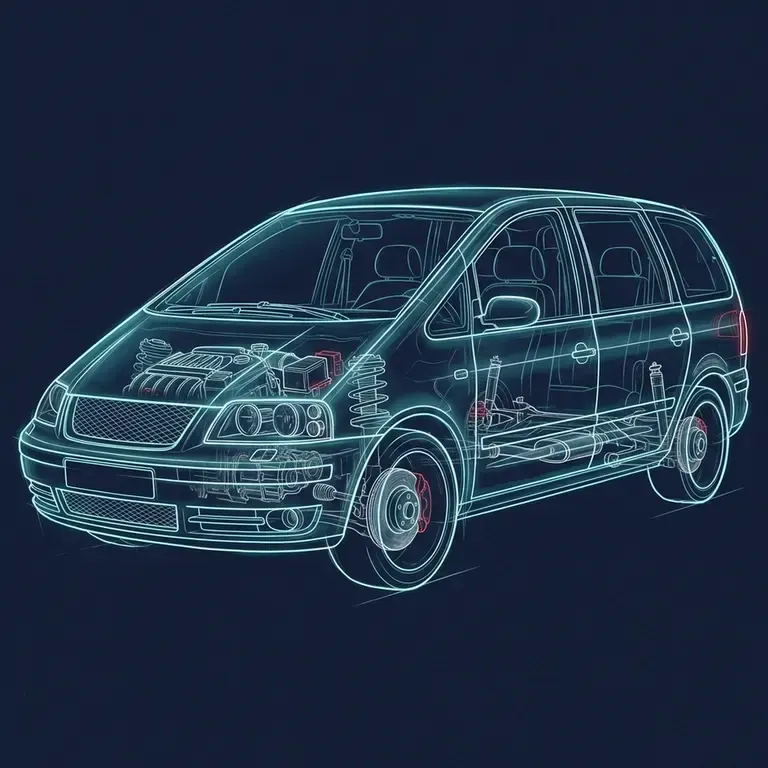
Volkswagen Sharan 7M 1995 a 2010
Available readings for Volkswagen Sharan 7M 1995 a 2010. Connect a compatible adapter to read fault codes and car data. Results depend on the engine and equipment.
76 brand readings.
What Final OBD reads on this car
76 brand readings.
Engine 1
- Accelerator pedal
- Air mass flow (MAF)
- Ambient temperature
- Camshaft position
- Control unit temperature
- Cruise control speed
- Engine speed
- Engine torque
- Exhaust temperature
- Fuel consumption
- Fuel in tank (litres)
- Fuel temperature
- Intake air temperature
- Oil level
- Oil temperature
- Requested camshaft position
- Target idle speed
- Throttle
- Torque limit
Engine 2
- Control module voltage
Turbo and intake
- Boost pressure (absolute)
- Charge air temperature
- Gas temperature before the turbo
- Manifold pressure (MAP)
- Measured air
- Requested boost pressure (absolute)
- Requested intake air
- Turbo actuator
Fuel and injection
- Injected quantity
- Injection timing
- Preheating time
- Rail pressure
- Requested rail pressure
Cylinders
- Injector correction
- Misfires
Catalyst
- Temperature before the catalytic converter
Particulate filter
- Ash limit
- Ash load
- Distance since last regeneration
- Filter ash in litres
- Filter differential pressure
- Filter load
- Filter temperature
- Measured soot load
- Soot limit
- Soot limit for the workshop
- Soot load
- Temperature after filter
- Temperature before filter
- Time since the last regeneration
- Unfinished regeneration
AdBlue and NOx
- AdBlue in tank (litres)
- AdBlue level
- AdBlue range
EGR and exhaust
- EGR position
- Requested EGR position
Gearbox
- Clutch temperature
- Gearbox output speed
- Transmission input speed
- Transmission oil pressure
- Transmission oil temperature
Brakes and stability
- Wheel speed
12 V battery
- Alternator load
- Alternator power
- Battery voltage
Climate
- A/C compressor speed
- Cabin temperature
- Evaporator temperature
- Refrigerant pressure
Maintenance and kilometres
- Distance to service
- Mileage
Traction and 4x4
- Axle speed difference
- Centre coupling current
- Drive clutch
- Haldex clutch disc
- Haldex voltage
Standard OBD (43)
And always standard OBD: up to 43 standard readings, depending on what your car gives.
Engine 1
- Accelerator pedal
- Actual torque in percent
- Air mass flow (MAF)
- Ambient temperature
- Barometric pressure
- Coolant temperature
- Engine load
- Engine speed
- Fuel consumption
- Fuel level
- Ignition timing
- Intake air temperature
- Low fuel pressure
- Oil temperature
- Requested torque in percent
- Throttle
- Vehicle speed
Engine 2
- Control module voltage
Turbo and intake
- Boost pressure (absolute)
- Charge air temperature
- Manifold pressure (MAP)
- Requested boost pressure (absolute)
Fuel and injection
- Injection timing
- Rail pressure
Mixture and lambda
- Lambda
- Long term fuel trim
- Oxygen sensor voltage
- Short term fuel trim
Catalyst
- Catalyst temperature
Particulate filter
- Filter differential pressure
- Regeneration active
- Temperature after filter
- Temperature before filter
AdBlue and NOx
- AdBlue level
- NOx
EGR and exhaust
- EGR position
- EGR temperature
- Requested EGR position
High voltage battery
- High-voltage battery charge
Gearbox
- Gear
12 V battery
- Battery voltage
Maintenance and kilometres
- Engine hours
- Mileage
The app shows the readings your car provides, depending on its engine, year and equipment. They can vary from one car to another. This list keeps evolving: we remove readings that prove unreliable and keep adding new ones.
The app shows the readings your car provides, depending on its engine, year and equipment. They can vary from one car to another. This list keeps evolving: we remove readings that prove unreliable and keep adding new ones.